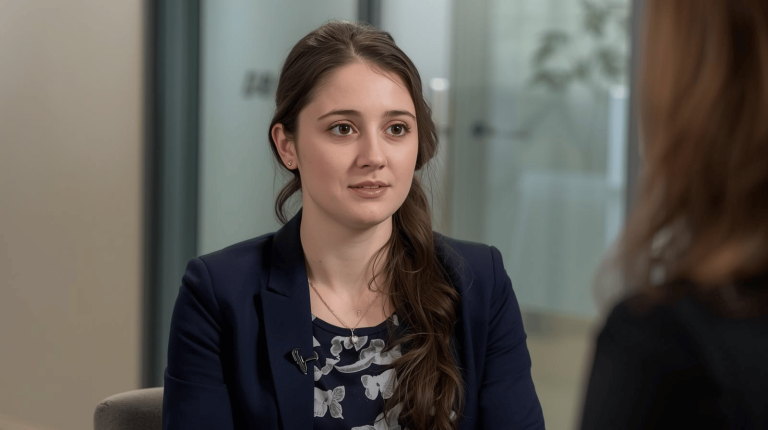

Interviews can feel scary, especially when you really want the job.
You might start overthinking everything. What if I say the wrong thing? What if I forget my examples? What if they ask something difficult? What if I walk in, panic, and my brain suddenly leaves the building?
First of all, that is normal. Most people get nervous before interviews. Even confident people. Even adults who have done loads of them. Feeling nervous does not mean you are bad at interviews. It means you care.
The good news is that interviews are not about being perfect. They are about showing the employer that you are prepared, interested, reliable, and ready to learn.
Here is how to give yourself the best chance.
Turn up on time
This sounds basic, but it really matters.
Turning up late can make a bad first impression before you have even spoken. It can make you look unreliable, even if you are actually a brilliant person who just got caught by a late bus, a confusing building entrance, or a phone battery that decided to give up at the worst possible moment.
Plan your journey before the day. Check where the interview is. Look at the bus, train, walking route, parking, or building entrance. If it is online, check the link, your camera, your microphone, and your internet connection before the interview starts.
Aim to arrive early, but not ridiculously early. Around 10 to 15 minutes early is usually enough. If you get there much earlier, wait nearby for a bit. You do not need to appear at reception 45 minutes early like you are auditioning to become the office ghost.
Being on time tells the employer: I respect your time. I am organised. I take this seriously.
Wear the right clothes
You do not need expensive clothes to look interview-ready.
What matters is that you look clean, tidy, and like you have made an effort. Your clothes should match the type of job as much as possible. For an office role, smart trousers, a shirt, blouse, plain top, blazer, dress, or smart shoes can work well. For retail, hospitality, care, or practical roles, you still want to look neat and professional, but you do not need to dress like you are heading to a royal garden party.
Avoid anything too distracting, messy, crumpled, or uncomfortable. If you keep pulling at your clothes, worrying about your shoes, or feeling like you are wearing someone else’s personality, it will make you feel more nervous.
Pick your outfit the night before. Try it on. Make sure it fits, feels comfortable, and is ready to go.
The aim is not to look rich or fancy. The aim is to look prepared.
Do your homework
Before the interview, spend a bit of time learning about the company or organisation.
You do not need to memorise their entire history. Nobody expects you to know what the manager had for lunch in 2007. But you should know the basics.
What do they do? Who are their customers? What kind of role are you applying for? What skills do they mention in the job advert? Why do you want to work there?
If they ask, “What do you know about us?” you want to be able to give a simple, confident answer.
For example:
“I know you are a well-known retail company and customer service is a big part of the role. I also noticed you offer training, which interests me because I’m keen to build my skills and develop.”
That is much better than:
“Erm… you sell stuff?”
A little research can make you look much more confident.
Practise your answers
You cannot predict every question, but you can prepare for the common ones.
Interviewers often ask things like:
Tell me about yourself.
Why do you want this job?
What are your strengths?
Can you give an example of working in a team?
Tell me about a time you dealt with a difficult situation.
Why should we hire you?
Practise saying your answers out loud. This might feel awkward, but it helps. Thinking an answer and saying it are two different things. When you practise out loud, you get used to hearing yourself speak and your answers become smoother.
You do not need to sound like a robot reading from a script. In fact, please do not become InterviewBot 3000. You just need to know the main points you want to say.
Try using the STAR method
A good way to answer example questions is the STAR method.
Situation: What was happening?
Task: What did you need to do?
Action: What did you do?
Result: What happened at the end?
For example, if they ask about teamwork, you could say:
“In college, I worked on a group presentation. One person was nervous about speaking, so I suggested we split the work based on what everyone felt most confident doing. I helped organise the slides and checked in with the group before the deadline. We completed the presentation on time and got positive feedback.”
That answer shows teamwork, organisation, communication, and problem-solving.
Much better than just saying, “Yeah, I’m good in a team.”
Learn how to upsell yourself
Upselling yourself does not mean bragging.
It means helping the employer understand what you can offer.
A lot of young people undersell themselves because they think they do not have enough experience. But experience does not only come from paid work. It can come from school, college, volunteering, helping family, hobbies, clubs, caring responsibilities, sports, group projects, or dealing with difficult situations in life.
If you have helped look after siblings, that can show responsibility.
If you have worked on a college project, that can show teamwork.
If you have had a part-time job, that can show reliability.
If you have helped customers, classmates, neighbours, or family members, that can show communication skills.
If you have kept going through a difficult time, that can show resilience.
The trick is to connect your experience to the job.
Instead of saying:
“I’ve only worked in a café.”
Say:
“My café job helped me build customer service skills, stay calm when it was busy, handle money, and work as part of a team.”
Instead of saying:
“I don’t have much experience.”
Say:
“I’m at the start of my career, but I’m reliable, keen to learn, and I’ve already built skills through school, college and helping in busy situations.”
See the difference?
You are not pretending to be something you are not. You are explaining your value properly.
Use breathing exercises if nerves hit
Interview nerves can make your body do dramatic things.
Your heart races. Your mouth goes dry. Your hands feel weird. Your brain starts acting like it has opened 97 tabs at once and all of them are playing music.
Before the interview, try a simple breathing exercise.
Breathe in slowly for four seconds.
Hold for two seconds.
Breathe out slowly for six seconds.
Repeat this a few times.
Longer breathing out can help calm your body down. You can do this before you go into the building, in the bathroom, on the bus, or before joining an online interview.
During the interview, if you need a moment, take one. It is okay to pause before answering. You can say:
“That’s a good question. I’ll just think about that for a moment.”
That sounds much better than panicking and rushing into an answer you do not mean.
Bring the right attitude
Employers do not expect you to know everything, especially if you are applying for an entry-level role.
What they do want is someone who seems willing, polite, reliable, and ready to learn.
So show interest. Listen carefully. Smile if it feels natural. Say thank you. Ask a sensible question at the end.
You could ask:
“What does a typical day in this role look like?”
“What training would be available?”
“What skills would help someone do well in this job?”
That shows you are thinking seriously about the role.
Do not panic if it is not perfect
You might stumble over a word. You might forget something. You might answer one question badly. You might walk out and immediately think of a better answer, because apparently brains love doing that five minutes too late.
That does not mean the whole interview was a disaster.
Interviewers are human. They know people get nervous. One imperfect answer does not ruin everything.
If something goes wrong, keep going. Take a breath, reset, and focus on the next question.
Confidence is not about never making mistakes. It is about not letting one mistake take over the whole interview.
After the interview
When the interview is over, be polite and thank them for their time.
If you want to, you can send a short thank-you email afterwards, especially for office, apprenticeship, or professional roles. Keep it simple.
You could say:
“Thank you for taking the time to interview me today. I enjoyed learning more about the role and I’m still very interested in the opportunity.”
Then try not to torture yourself by replaying every sentence you said. Easier said than done, obviously, but try.
Whether you get the job or not, every interview is practice. You learn how to answer questions, manage nerves, talk about yourself, and understand what employers are looking for.
That experience is never wasted.
Final thought
To ace an interview, you do not need to be the loudest, smartest or most confident person in the room.
You need to be prepared.
Turn up on time. Dress appropriately. Learn about the company. Practise your answers. Use breathing exercises to calm your nerves. Most importantly, learn how to talk about your strengths without shrinking yourself.
You have more to offer than you may realise.
The interview is your chance to show it.
About the Author